Mortgage Rates Jump After a Hot Inflation Report: What It Means If You’re Buying in Miami

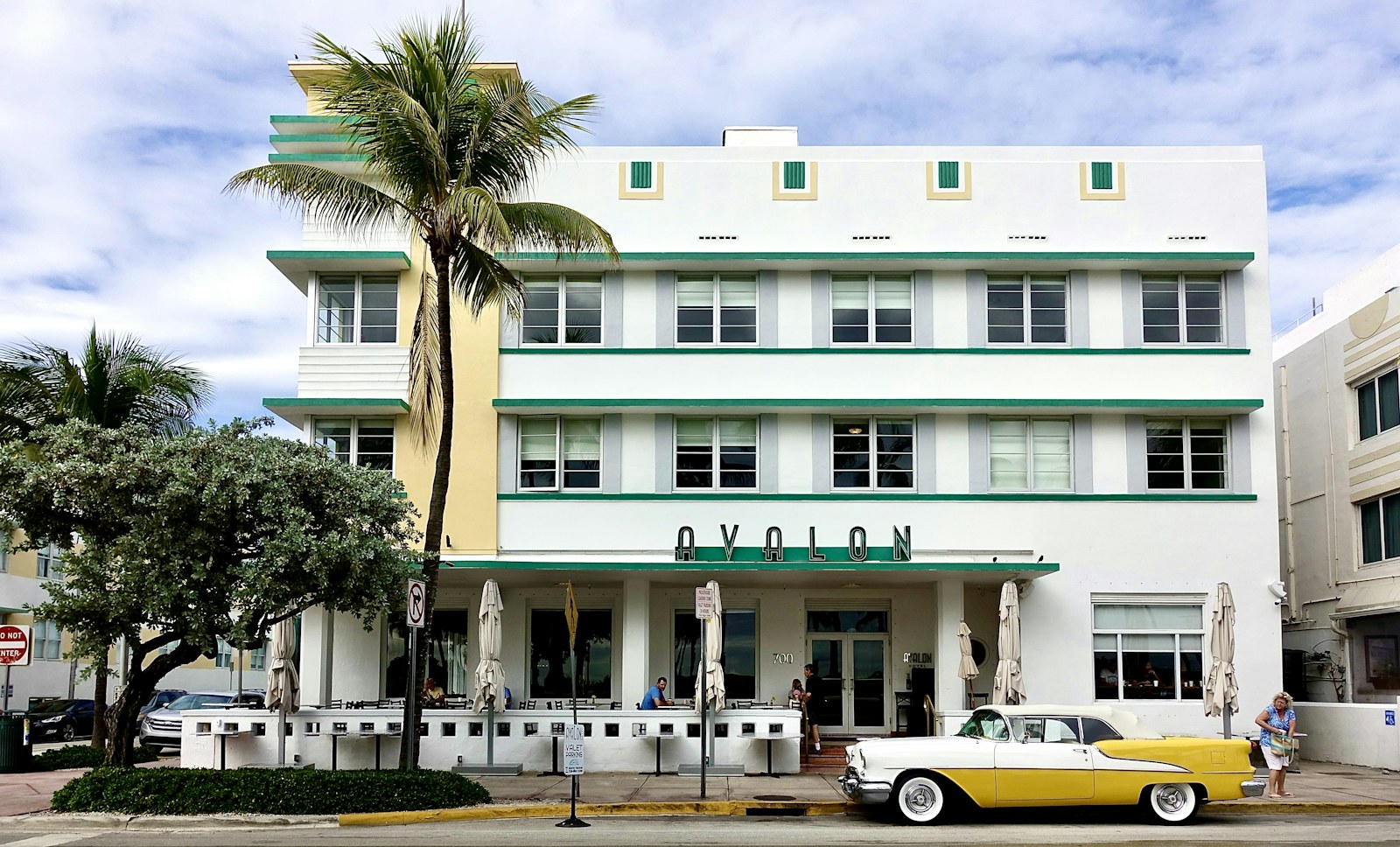
Photo by Dennis Rochel on Unsplash
Mortgage rates had declined for four straight weeks, according to Freddie Mac’s weekly survey (its average dropped to 7.11 percent, the lowest in seven weeks). Then last week’s hotter-than-expected inflation report sent daily rates right back up. And homebuyers noticed: mortgage applications decreased 2.3 percent last week, according to the Mortgage Bankers Association.
If you’ve been trying to time the market to buy or sell a home, you know how maddening it can be to think the window of opportunity is finally there, only to watch it slam shut again.
The good news? No one can time the market perfectly, and you shouldn’t let ever-changing mortgage rates keep you from making a big financial decision. Here’s what’s going on with mortgage rates this week, how much of a difference it makes on your monthly payment, and what I would do if I were in your shoes.
What the inflation report did to rates
Consumer prices rose 0.4 percent in October from September, according to the Bureau of Labor Statistics. Markets had expected a 0.3 percent increase.
Higher inflation means higher mortgage rates. When inflation increases, so do bond yields, and mortgage rates generally follow bond yields. Higher inflation means the Fed may need to increase interest rates more times than previously thought in order to bring inflation back down. Both of these factors can raise mortgage rates.
Rates had their steepest daily jump in more than a month, and the daily average for a 30-year fixed climbed about a quarter of a point between Tuesday and Thursday last week, after the inflation report and Fed officials saying more rate hikes may be needed. Rates have come down a bit since but are still hovering around one-month highs.
If you’re thinking of buying a home in Miami, it may be a good idea to see what kind of rate you could get right now. Keep an eye on rates and be ready to make an offer when the right house shows up.
Photo by Nicholas Fuentes on Unsplash.
The numbers
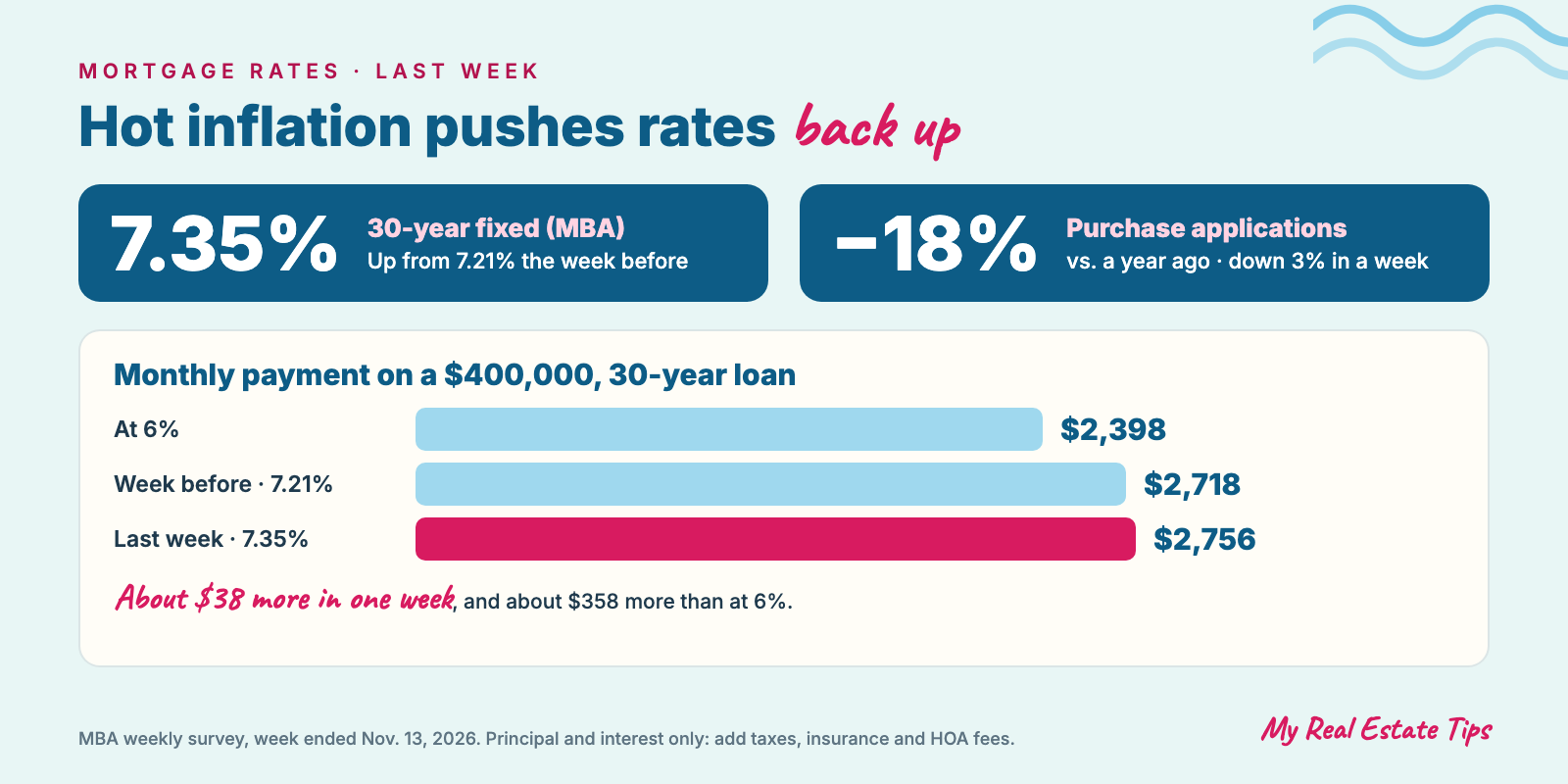
The Mortgage Bankers Association reported the average 30-year fixed rate at 7.35 percent, up from 7.21 percent. The increase means rates have reached their highest level in three weeks. On top of that, points for a 30-year mortgage increased to 0.79 points from 0.75 points. For folks shopping for a home, those costs quickly add up.
According to the MBA, jumbo mortgage rates (loans over $832,750) increased to 7.31 percent. FHA loan rates inched up to 7.06 percent. 15-year fixed rates held steady at 6.64 percent. 5/1 ARMs increased to 6.38 percent.
Last week Freddie Mac pegged the average 30-year fixed rate at 7.11 percent. Freddie Mac will publish its latest survey on Thursday.
Freddie Mac’s and the MBA’s numbers are different. That does not mean one is right and the other is wrong. Different surveys measure different things and reach different conclusions. Compare Freddie Mac’s numbers with Freddie Mac’s numbers and the MBA’s numbers with the MBA’s numbers. It’s apples and oranges. Pick one and follow it religiously.
What a jump like that does to a payment
Say you want to purchase a $400,000 house in Miami with a 30-year mortgage. At 7.35%, your monthly principal and interest payment would be $2,756. That’s $38 more than it was the week before, when the interest rate was 7.21% (a payment of $2,718). Not bad, right? Well, at 6%, your principal and interest would be $2,398, which is $358 less than it is now at 7.35%.
On top of your mortgage payment, Florida homebuyers must budget for property taxes, homeowner’s insurance (and, if applicable, flood insurance). If you’re considering purchasing a condo in Miami, you’ll want to factor in HOA fees, too. These additional monthly expenses can add up quickly.
Mortgage rates are on the move. Before you purchase a home, it’s important to understand how mortgage rates impact your monthly payment, and make sure you’re budgeting for more than just your mortgage payment. Don’t let current mortgage rates sway your homebuying plans, but don’t overlook the impact of mortgage rates on your monthly payment, either.
Buyers stepped back
Applications to buy a home decreased 3 percent last week from the previous week and are down 18 percent from a year ago. Refinance applications decreased 2 percent last week and are down 54 percent from a year ago. Overall mortgage applications decreased 2.3 percent for the week ended November 13.
Affordability concerns sidelined some would-be home buyers as mortgage rates inched back up last week, according to Joel Kan, the MBA’s deputy chief economist.
FHA refinance applications bucked the trend, increasing almost 7 percent as FHA mortgage rates hovered about 0.3 points lower than conventional rates.
The week before, applications had gone up as mortgage rates eased. Last week, applications decreased as mortgage rates increased. It’s a reminder that, when it comes to buying a home, there’s always something to be concerned about.
Why the market feels stuck
Brad Case, chief residential economist for Homes.com, described it as a stalemate, as buyers aren’t happy with prices and interest rates, but current owners aren’t eager to sell because they’d then have to deal with interest rates and prices to buy another home.
That’s the bad news, and while it’s not new because we’ve all seen cycles before, I have to admit that I’m finding this particular pause unnerving.
Any good news? Well, there’s kind of none of that right now. Case doesn’t see an easy out of the current market situation.
Existing home sales tumbled to a 16-year low in October, according to the National Association of Realtors. Lawrence Yun, its chief economist, blamed mortgage rates and said it will take rates dropping to at least 6 percent before home affordability significantly improves.
In October, inventory was up 4.8 percent while home sales were down 11.7 percent, according to Homes.com data. The national median sale price was $383,598, down 0.4 percent from a year ago.

Photo by Juan Pablo Mascanfroni on Unsplash.
What I would do as a buyer in Miami right now
Here’s what you should do with this information: Don’t let one week’s headlines fool you. Rates fell for weeks, then jumped in a few days. Get a couple of quotes from a mortgage lender. The interest rate you get will depend on your credit history, down payment, the type of loan and other factors. The MBA’s average for a 30-year fixed mortgage is 7.35 percent, but that’s with about 0.79 points paid up front.
Get quotes on different interest rates and number of points so you can make an apples-to-apples comparison. If you qualify for an FHA-insured mortgage, the average interest rate is lower, at 7.06 percent. A 5/1 adjustable-rate mortgage started at an average of 6.38 percent last week, but that rate can change after five years. Don’t get one unless you fully understand how they work.
With more homes for sale and fewer buyers, ask the seller if they’ll give you a credit to help pay points to buy down your rate.
Don’t forget other costs that can significantly increase your monthly payment, such as insurance premiums, condo association fees and in Miami, flood insurance premiums. That could be quite a chunk of change that you didn’t anticipate. Keep these figures in mind so you know what you can truly afford.
Lock or wait?
Once you’re under contract, your lender will be able to offer you a rate lock, which means that they’ll guarantee that your rate won’t increase before your closing date (usually for a set amount of time). However, if rates were to drop during that time, you’d probably still end up with the higher rate, unless your lender offers a “float-down” option, allowing you to benefit from the decreased interest rate. You’ll want to ask them if they do offer this service, and what (if any) fees would be associated with it.
Here’s the thing about interest rates, no one can predict what they’re going to do. They can, and do, change dramatically in very short periods of time. I’ve been in the business long enough to have seen this first hand many times.
If you lock your rate and rates drop, you’ll probably lose out on saving yourself some money by waiting.
If you don’t lock your rate and rates increase (like they just did), you’ll probably pay more than you expected for your new home.
So what’s the answer?
My advice is that, if you’re happy with the payment you’re quoted at today’s interest rate, go ahead and lock. Why? Because then you’ll have the peace of mind of knowing exactly what your payment will be. And in Miami’s real estate market, hesitation can mean losing out on the home of your dreams.
Don’t let fear control your decisions. Figure out what payment you’re comfortable with, and when you find out that your payment will fall within that range, take the plunge. Besides, there are more important things to be stressing about than interest rates.

Photo by Colin Lloyd on Unsplash.
If you are selling
As a seller in today’s market, be aware of your buyer’s budget. Homes.com says inventory climbed 4.8 percent nationally in October, so yours may have more competition. Pricing your home to match what buyers can afford to pay, not necessarily what you’d like to receive, may help your home stand out from the competition.
Offering a buyer a few thousand dollars toward a rate buydown can go a long way when mortgage rates are elevated. It can help more buyers afford the payment than a price cut of the same amount would.
The buyers still shopping right now are serious ones. Help them picture life in your home and make the process as easy as possible.
When it comes to real estate, history tends to repeat itself, but never exactly. If you’re buying or selling a home this year, keep this in mind: conditions are unique, and the numbers don’t add up like they used to. Work with your real estate agents and financial professionals to make sure you’re prepared for what’s ahead so you can reach the finish line with confidence.
Featured photo: Dennis Rochel / Unsplash.