
The Moving Day Tricks I’ve Learned After 40 Years in Real Estate


Photo by M. Cooper / Unsplash.
With moving, it depends upon the budget. Some people get a moving company and have them pack and unpack. If you are not in that price range, get organized. Weed out your cupboards. Weed out your closet. Take the things you want. Some things you can put in your car or SUV and take to the new place. Put things in the closet. That saves expense.
If your budget is tight, try to move as much as you can. Pack your things, but do not just throw them in a box. Go to the storage place, buy the paper, buy the boxes. I have done that in the past. I have taken clothes in an SUV, laid them down, and hung them up when I got there. Again, that is budget related.
That is the short version. Here is the longer one, in the order it actually happens.
Decide the budget before anything else
First choice: what’s your budget? This absolutely needs to happen before anything is planned or booked. From supplies to timelines to cost estimates, it will affect everything. You’re trying to determine how much help you need, which really just comes down to how much money and energy you have to spend on your move.
On one end of the spectrum you can pay someone to pack, load, drive, unload, and even unpack your belongings. It will be the most expensive, but require the least amount of time. Somewhere in the middle might be to hire people just to load, drive, and unload the big stuff, but do all of the packing yourself. Other times you’ll find you have enough friends (or will pay people) to help you lift furniture and have enough will (and an SUV) to get everything yourself or will just rent a moving truck.
Whichever option you choose, though, you’re going to save money by getting rid of stuff, so you must sort through your stuff before you get cost estimates from movers. You won’t really know what kind of truck you need (or how many, in some cases) without getting a handle on what you’re bringing. Getting an estimate before that point can mean you’re spending energy thinking about services you don’t even need and cause needless stress. Once you’ve gotten rid of items that don’t need to come with you, you’ll have a better idea of how much you’re taking and the estimates will make more sense.
Six weeks out: weed out the cupboards and the closets
This saves you time and effort (and money). Why pay for another trip in the moving truck, or another box (complete with tape and bags) just to save an appliance you use once a year? You’ll also save money by paying your movers for fewer hours if they have fewer boxes to load and unload.
Sort through your stuff before you box it up. The kitchen is a great place to start. Empty your cupboards, and dump it all out on the counter. Then decide what you really use or love, and only pack up what deserves to be put in boxes. This can be surprisingly revealing in the kitchen. There’s so much you can part with: extra mugs, chipped dishes, a blender that you bought 5 years ago and have used twice, duplicate utensils and measuring cups, food past its prime, etc. Keep your good dishes to use on special occasions, but part with everyday dishes that you’ve outgrown.
The same idea can be applied in your closets. Empty them out and decide what to keep. If you haven’t worn it in the last year, it doesn’t fit, it needs mending and you know full well that it’s not going to happen, then it’s time to say goodbye. Clothes that don’t fit you now will not magically fit later. Why save the effort of carrying them into your new home, only to take up valuable space? You will be shocked how easy it is to make these decisions ahead of time. Otherwise, you’ll be wasting energy packing something up that you will part with down the road. And chances are that once you are in the throes of moving, you won’t have the energy to mend those items anyway, so you may as well cross that bridge now.
Be unsentimental and ruthless. Ask yourself if each and every item that you own serves a purpose. If not, part with it. You’ve been collecting stuff for decades, and it can easily overwhelm you. It’s best to weed out items now, before they clutter your house. Be sure to get donated items out of your house the same day that you set them aside. Otherwise they will just collect by the doorway, and add to the clutter.
Finally, it’s easier to finish packing up one room before moving onto the next room. That way, you can still function normally in your home as moving day approaches, and you won’t have a mess in every room.
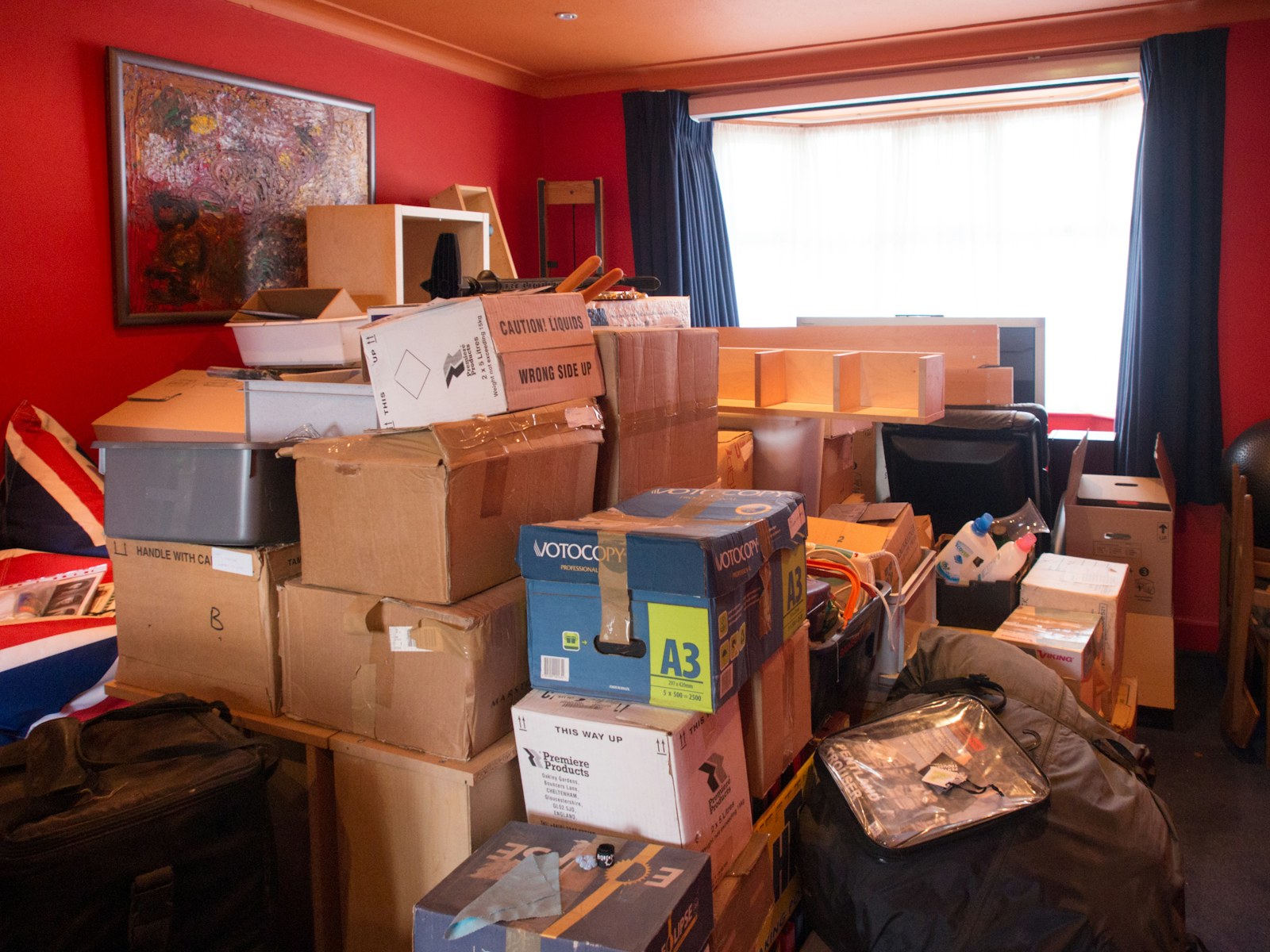
Photo by Brett Jordan on Unsplash.
Getting quotes that mean something
- In my experience, quotes over the phone are hardly ever accurate, let alone meaningful. Hire a reputable company that will come out to your house (or do a video walk-through) and go over every item with you (including garage, closets, attic, patio, you name it).
- Get 3 quotes so that you have an idea of what the ball park price should be. I wouldn’t necessarily choose the cheapest each and every time.
- Make sure you know if the quote you’ve received is final/binding or if it can fluctuate. Some moving companies base their cost on the actual weight of items and the amount of labor/hours it takes. These quotes could increase significantly after the move.
- Get your quote in writing on paper. If you declutter/purge after the initial quote was given, ask the moving company for an updated quote in writing.
- Ask about other fees: Stairs, longer carries from truck to front/back door, cost of packing materials, piano/safe removal, waiting fees in case your closing date is delayed, etc.
- Before signing any agreements make sure the company you’ve hired provides you with their license number and proof of insurance and you should research these numbers to validate.
- Check out some reviews about your movers. Find out what happens if your stuff is damaged, will they honor their claims?
- Try and move earlier in the month if possible. Last days of the month are extremely busy for moving companies. If you can also move during the week do so. Weekends are the busiest and most expensive times to move.
Buy real boxes and real paper
Do not use boxes from the grocery store. I can’t stress that one enough. Although it might seem convenient (and free), grocery store boxes are all different sizes and their bottoms can be flimsy (or dirty). Boxes should all be the same size so that they stack easier in the truck, and so they don’t cave in during your move. There are plenty of stores (or storage facilities) that sell moving supplies, including boxes (small, medium, large), wardrobe boxes, packing paper, tape, etc. Use small boxes for heavier items like plates and books, and large boxes for lighter items such as bedding or lampshades. (if you fill a large box with plates the bottom of the box will give out during the move). And while it might seem like a good idea to use newspaper to pack your dishes, think twice, because its ink can rub off on your hands and stain your dishes. Invest in some packing paper, you can probably return any leftover boxes/paper to the store you bought them from.
Label, label, label, and on at least two sides of each box, indicate which room it belongs to as well as a general 3 word description of what the box contains (for example: primary bedroom, picture frames). This will save you so much time when unloading the truck.
Fill empty spaces with packing paper/towels etc. A half empty box will cave in easily if another box is placed on top of it.
Tape the middle of the bottom and across it. Believe it or not, but one line of tape down the middle won’t cut it for a box full of (you guessed it) plates.

Photo by CHUTTERSNAP on Unsplash.
If either home is a condo, call the building first
If you’re moving into or out of a condominium, you need to be aware of rules and restrictions that can come as a surprise to many when it’s time to move (I’ve seen this many times in Miami Beach). Most buildings require advance scheduling for use of their elevators, protective elevator pads, have specific times (during the week) when you can or can’t move, etc. Most will also require movers to provide them with a certificate of insurance naming the condo association as being insured, before they will allow movers trucks entry into the property. Some even require a move in/out deposit, refundable if no damage has occurred. It’s very important to call the management company (as soon as your closing date is set) and ask what procedures they require. If moving both out of and into a condo, contact both. Many times the moving company/movers aren’t aware of these rules and it is not of much concern to the buildings, as they just want to make sure their rules and procedures are followed. I get this information in writing from the building and keep a copy. Without the proper approval, moving trucks get turned away at the building, and you lose the day and the day rate. The building determines where trucks can load, not movers, may have truck size restrictions, determine where trucks park, etc. It’s much easier to deal with this well in advance of your move instead of trying to sort it out on moving day.
The week before: utilities, addresses and one folder
The final week of your move is the paperwork week. It’s also the week when, feeling fatigued from all your moving preparations, it’s easiest to overlook things. Plan ahead and schedule the transfer of all your utilities. Arrange for electric, water, internet and gas service in your old place to be shut off the day after your move and set up service in your new home to be on the day before you move. It’s much easier this way. Put together a file of important documents. Collect your closing documents (or rental agreement or purchase contract), written estimates from movers, rules governing your new building, garage door openers and keys to everything and store them all in one place. Don’t include this file in the boxes you hand to the moving company, as it should travel with you because you’ll need it immediately. It’s also a good idea to take pictures of your empty home (old and new) for future reference so there’s no confusion about meter readings or damage to your old or new place. Get on the phone and alert the post office, your bank, your insurance company, your pharmacy, anyone who sends you mail of your change of address, since it takes longer than you think. Confirm closing time, make certain you’ll have your keys and won’t keep your waiting movers standing around outside while you’re stuck in traffic (that’s no fun) If your closing won’t mesh with your move-in/out date, arrange temporary storage and a place to stay. Do this immediately and not the night before when temporary accommodations will cost an arm and a leg, or not be available. Planning ahead makes moving less stressful.
What goes in your own car
These are the things that ride in my own car, starting with the first night container. I always bring the first night container with me, not on the moving truck. I find when I walk into my new house, I’m hungry and tired and just want a shower. It’s nice to have that container waiting for you that has your sheets and towels, toilet paper and soap, your shower curtain, tools (just basic), phone chargers, coffee and paper plates. Valuables never go on the truck. Items like jewelry, important documents, medications, laptop, chargers, etc should come with you in your car. Same with your pets and their items. Their bowls, food, litter box, leash, whatever your pet needs, come with you. I like to keep the pets contained in a closed room until the movers leave. It will make it easier to keep track of them, they’ll feel more calm in such a hectic move, and you’ll have them contained. Clothing I bring in the car on hangers. Lay them down in the back of the car/SUV. It saves tons of space. They’re ready to go into the closet when we get there. Make sure everyone has a bag with about 2 days worth of clothes in them. No one wants to go digging through boxes on their first night in a new house looking for pajamas. Last thing into your car and first thing out, your plants. They might not make it in that hot moving truck. At least here in Florida they won’t. Consider your moving car an extension of your home and pack accordingly. No digging through boxes, everything at your fingertips.
Moving day itself
On moving day have boxes for each room grouped together close to the door before the movers arrive. The box you would want first (toiletries, pajamas etc.) and your important folder should be brought with you not in the moving truck. At the new house if you tape a sheet of paper on the doors of each room with the name of the room it saves stopping the movers to ask what room each box goes in. Have one sheet for the movers to make out an inventory of all the items they have and make sure you get a copy before leaving. If there is any damage to the furniture it is a good idea to note that down too. That way if there is ever any argument as to whose fault it is there is written proof. If possible it helps to split up at this time. While one is meeting the movers at the new house the other can walk through the now empty house. Take pictures of the rooms empty and the meter readings for your final walk through. In Florida it’s always appreciated for the movers to have something to eat and plenty to drink. Fed and hydrated movers do good work. Leave appliance brochures, garage door opener remotes, alarm codes etc on the kitchen counter for the next owners. This is appreciated. Lastly, walk through all rooms, closets, cupboards, cabinets, drawers and leave all keys and openers.

Photo by Alicia Christin Gerald on Unsplash.
The first night and the first week
A few tips for the unpacking marathon.
On the first night I highly suggest you unpack the beds first (if they’ve come disassembled) so you’ve got somewhere to crash. You’ll be beat. After that maybe your bathrooms (shower curtain, towels, toilet paper) and enough in the kitchen to make a pot of coffee and maybe fix a really simple meal. That about sums it up for the first night. By this time you’ll be so tired you won’t care what the living room looks like, so save it until tomorrow.
Hang some of your clothes in the bedroom that came with you in the car. This will go a long way to feeling like you’ve accomplished something. Over the first week unpack one room at a time. I find it helpful to breakdown the boxes as you go otherwise they’ll take over your new home.
During the first week I highly recommend that you either change the locks or at least your garage door remote codes as it is entirely possible the previous owners still have a set of keys. Also it never hurts to know where your master electrical and water shutoffs are just in case.
I’ve watched a lot of people move in forty years, and these are the things that save the headaches.
Where people waste money on a move
- Packing things you do not want. This is a waste of your money, since your items will take up space in the truck. It’s also a waste of your movers’ time, since they’ll be paid to haul items you won’t want when you get to your new home. Donate or throw away unwanted items before moving day.
- Putting off decisions. If you wait to figure out what to do with all your stuff, you’ll likely end up paying for a storage unit for the whole year. Figure out what you want to keep before packing to save yourself money and time.
- Buying tape and boxes the night before at full price. Many storage units will buy-back boxes and sell moving supplies for much less. Check with a few before buying moving supplies.
- Moving on the last weekend of the month. Many people move out and move into new homes on the last weekend of the month so that their leases line up, and because of this high-demand, movers will charge peak rates. Save some money by scheduling your move mid-week.
- Not allowing for a visual estimate. Without seeing your items, it could result in unwanted surprises in your final bill.
- Not checking regulations. Check with both buildings to see if there are any regulations before moving day. Without permission from management, your movers may not be allowed access, costing you a day. Or it could result in a forfeited deposit.
- Not measuring. Save your money by measuring the spaces in your new home. By forgetting to do so, you may think you need new furniture, when what you currently have would’ve fit just fine.

Photo by Zachary Kadolph on Unsplash.
Twelve odd little tricks that actually work
Over my forty years in real estate, I’ve picked up a number of little tricks to make moving easier. Some of them learned from watching the movers; some of them from clients who are really organized. Here are my favorites:
– Can’t wait to unload the dresser at your new home? Pack it completely, then use some plastic stretch wrap and wrap it all the way around to keep the drawers from falling out. Problem solved.
– Same with hanging clothing. Pull a big garbage bag up around them and tie it at the hangers. You’ll save yourself lots of time in getting them into the truck.
– Hate to wrap dishes and stemware in newspaper? Save yourself lots of work by wrapping them in your socks (make sure they’re clean). They will be well protected, and the socks will be packed, too.
– Shampoo and other household cleaners (anything that might leak), travel better in a laundry basket in your personal vehicle. Save yourself lots of grief and take them upright.
– Take pictures of cable arrangements before unhooking TVs, routers and the rest.
– Put an egg carton to good use by saving screws, small pieces from disassembled furniture and little pieces of jewelry (write what belongs in each space).
– Save all the little pieces (like above), put them into a zip bag, then tape the bag to the back of the piece of furniture they belong to.
– Use painter’s tape to X a glass pane on mirrors or picture frames. If broken in transit, the glass will stay together in one pile rather than scatter all over the place.
– Bath and dish towels make wonderful dish and plate wrappers, and they need to be packed anyway.
– Rubber band both doorknobs on an outside door so it can’t latch, saving yourself being locked out.
– Use colored masking tape to mark all the boxes from each room. Tape a color legend by the door at your new home and problem solved.
– Can you believe it took me thirty years to figure this one out, put your books in your rolling suitcase. Let the suitcase wheels carry the weight, not you, a box or the mover.
The moving-week checklist
Print this and tape it to the refrigerator the week before the truck comes.
- Decide full service, partial or do-it-yourself, and book the mover with a written quote.
- Finish the purge; donations and trash out of the house the same day.
- Call both buildings: elevator reservation, certificate of insurance, hours, deposit.
- Buy uniform boxes, packing paper and tape; label every box on two sides.
- Schedule utilities to stop the day after and start the day before.
- Change of address: post office, bank, insurance, pharmacy.
- One folder: closing papers, quotes, building rules, keys and openers.
- Pack the first-night box and a two-day bag per person for your own car.
- Confirm the key handoff time before the movers are booked to arrive.
- Photos of every empty room and the meters, old place and new.