10 Things I Recommend My Clients Do the Week They Move Into Their New Home


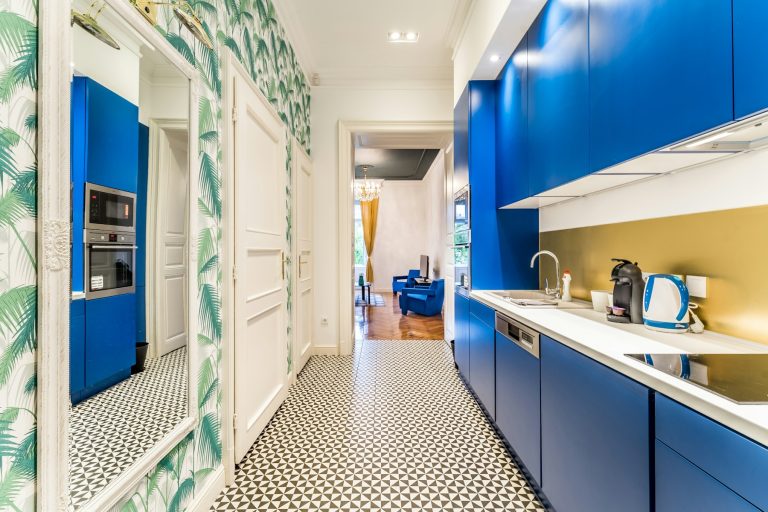
Photo by Patrick Tomasso on Unsplash
For forty years I’ve handed over keys to buyers. And I’ve given every last one of them this list of things to do. The week after you buy a house is an exciting, exhausting and often sleepless time. Here are some things to do before your new life begins and they’re in the order I suggest.
These things won’t win you any prizes or make you feel glamorous. They’re practical, down-to-earth stuff, locks, shutoffs, paperwork and a few simple habits that will serve you well during your first year in your new home. And they’re quick, most of them can be done in less than an hour.
Do these things while the house is still mostly empty. You won’t scratch the floors or break any lamps moving boxes. This is your last chance to get organized before life gets complicated. I want you to feel settled before the furniture goes in. Here’s the list.
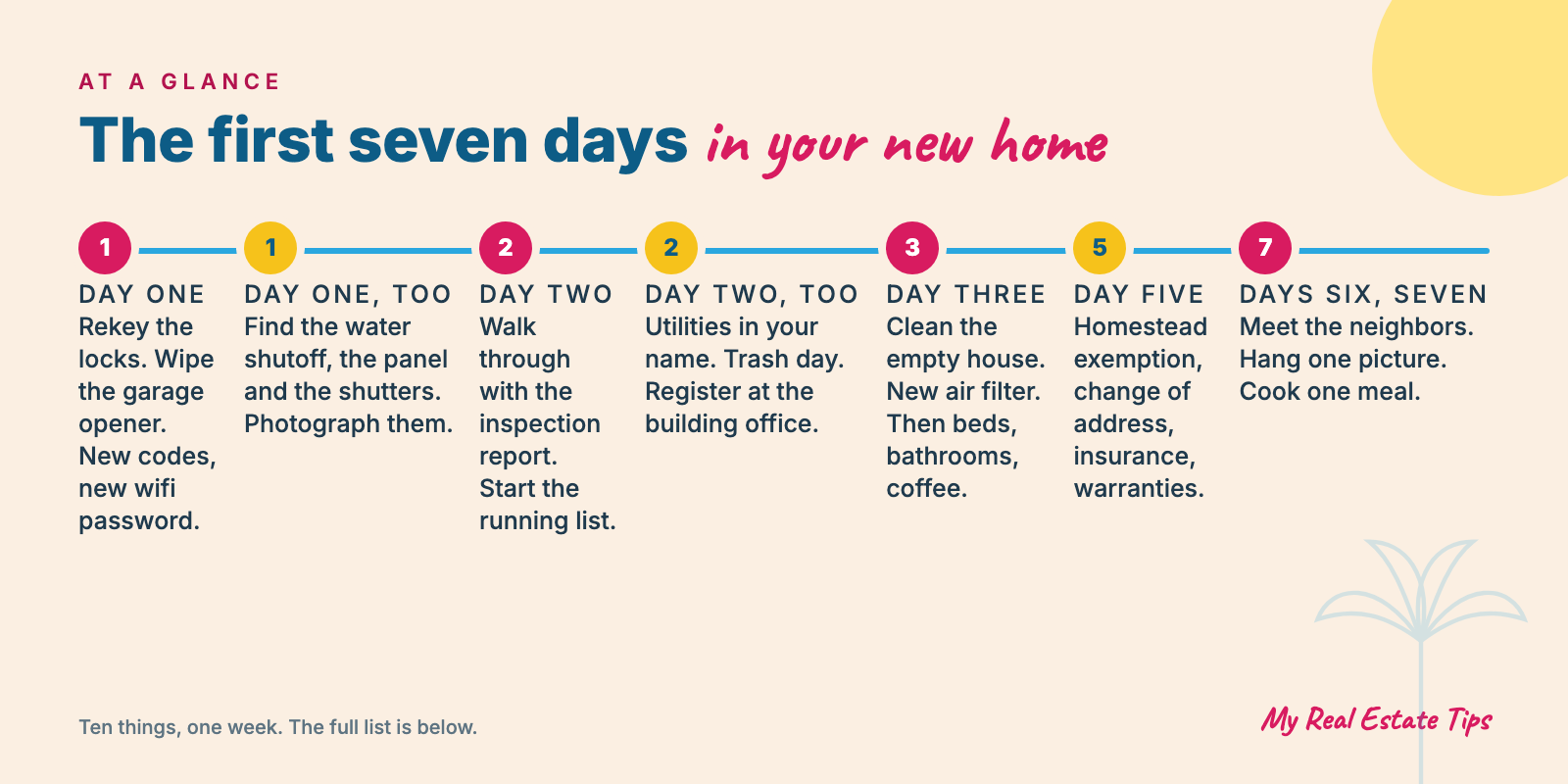
1. Change the locks and every code on the first day
Once you move in, the last thing you want is for someone to show up at your door with a key. On day one, change the locks and codes. Your old house keys could be in a lot of hands, cleaners, dog walkers, a cousin. Your real estate agent likely also has a key in his or her lockbox. Have your locksmith rekey your locks, there’s no need to replace them. It’s a simple job that takes less than an hour for a typical house and will give you peace of mind.
Change the codes for any remotes you have for the garage door. Erase the existing remotes and change the keypad code. If you live in a gated community or condo, management will likely take care of erasing the previous entry fobs, decals and clickers and give you new ones.
Before you turn in on night one, be sure to change the passwords to any smart technology that came with the house, the router password, alarm system, doorbell camera, thermostat. Sleep soundly.
Photo by Sean Benesh on Unsplash.
2. Find the shutoffs before you need them
Locate the main water shutoff, electrical panel, water heater and air conditioner drain line. Show everyone in the family (at least every adult) where they are. I don’t want you waking up to the sound of a burst line under the kitchen sink at 11 pm and have to fumble around trying to figure out where the valve is.
Label the breakers in the electrical panel if they aren’t already labeled. This will take about twenty minutes with a helper flipping switches to figure out which is which.
If there are hurricane shutters or panels, locate them and the hardware used to put them up and learn how they work. If you think you may have impact windows (which don’t require storm shutters), verify in your inspection report.
Locate and test your smoke detectors and replace the batteries with new ones.
If there is a fire extinguisher included with the home, locate it and check the date.
Take a picture of the electrical panel and the main water shutoff valve with your cell phone and keep the pictures readily available. It will save you time if there is a problem. You don’t want to be guessing in the dark.
I’ve found this to be very helpful for my clients over the years and it will help you and your family feel more at ease in your new home.
Fill this in
Where is it?
Tape this inside a kitchen cabinet door.
- Main water shutoff
- Electrical panel
- Water heater
- Air conditioner drain line
- Hurricane shutters or panels
- Gas shutoff, if any
- Fire extinguisher
- Irrigation or pool shutoff
3. Walk through with the inspection report and your phone
Before the boxes come in, walk through your new home with the inspection report. Take pictures of everything – walls, floors, inside of cabinets, meters, appliances, serial numbers. This way you have documentation of the condition of your home in case you ever need to make a repair, warranty or insurance claim or if the seller has agreed to make repairs after the closing. Check to make sure everything that was to convey with the sale has been left for you (washer and dryer, window treatments, pool equipment, remotes, manuals). If there are any problems or items that were left out, let your agent know right away. Don’t wait a month and find out your file is no longer active. As you’re walking through your home, open all the windows, run the faucets, flush the toilets, run the garbage disposal and dishwasher and turn on the air conditioning to listen to it. If you find problems, write them down on a list. Don’t tackle them one at a time.

Photo by Steph Wilson on Unsplash.
4. Get the utilities, the trash and the building paperwork sorted
Once you’ve moved into your new home, don’t forget to change over the utilities into your name (electric, water, gas, internet). You may think you’ve taken care of this, but you’d be surprised how many people receive notices that their power will be shut off in three days’ time if they don’t check. Find out the day of the week garbage and recycling are picked up, as well as rules for bulky item pickup. Nothing makes you look quite as forgetful as leaving old furniture curbside for pickup on the wrong day.
If you’re in a condo, drop by the condo office within the first few days to introduce yourself and fill out any move-in paperwork. The condo office will need to have some of your information, such as emergency contacts, pets, and vehicles, on file. You may want to make a reservation for use of the elevator for moving in deliveries. Find out about any condo rules regarding delivery times and use of contractors before scheduling anything, so that your appointments don’t get canceled.
Keep your account numbers for all your utilities and services in the same folder as your closing documents. Set up automatic payments for your HOA dues right away so that your first bill doesn’t end up being a late notice. It’s much easier to take care of these little details right away than to deal with fines or loss of service down the road.
5. Clean and service before you fill the rooms
Use the time when your house is still empty to scrub out all the cabinets (inside and out) and don’t forget to climb up on a step stool to clean the tops of the closets. You can hire someone to do this for you or spend a day getting it done yourself.
Make sure to clean out the fridge, oven and dishwasher filter before you move all your stuff in.
Have the carpets professionally cleaned before you move all your furniture in.
Replace the air conditioner filter the first week you’re in the house. If your move-in inspection report doesn’t indicate that it’s been done recently, have the AC serviced. It will determine the temperature in your house and your electric bill in Florida.
Have the dryer vent cleaned or replaced if it hasn’t been done in a while. Many people forget about this and it can be a serious fire hazard.
Before you put your furniture on your new floors, get some felt pads and put them on the bottoms of each piece of furniture. This will save your floors from scratches.
All of these little things can be accomplished fairly easily and they’ll save you lots of time later on. It will make your new house feel even newer.
6. Unpack in this order: beds, bathrooms, kitchen basics
Avoid the temptation to go out and buy furniture for your new home in the first week after your move. Wait a few weeks to figure out how you will use each room before you make any purchases.
To keep the unpacking process manageable, unpack one room at a time. Unpack your bedroom first so that you will at least have a place to sleep on the first few nights after your move. After unpacking your bedroom, focus your unpacking energy on the bathrooms so that you will have shower curtains hung, toilet paper and soap where you need it, and towels unpacked. Unpacking the bathrooms after the bedrooms will ensure that you have the things you need for personal hygiene and will make you feel more comfortable in your new home. Next, unpack enough of the kitchen so that you will be able to make a simple meal, which may include setting up the coffee maker, unpacking enough dishes for one meal, and finding a few pots and pans. After the kitchen, unpack the things you need to get dressed for work, which may include unpacking some clothing and hanging it in your closet. Unpack the rest of your things one room at a time. As you unpack boxes, break them down so that they do not take up space in your new home.
Photo by immo RENOVATION on Unsplash.
7. File the paperwork that saves you money
The homestead exemption is filed with the county property appraiser no later than March 1 of the year following purchase and provides certain benefits including lowering the taxable value of your home and limiting the amount the assessed value can increase annually. Be prepared to provide your deed, a Florida driver’s license showing the new address, and whatever else the county asks for to prove the home is your permanent residence.
Once you’ve updated your address with the post office, follow through by updating your address with your bank, insurance company, pharmacy, employer and voter registration.
If you have homeowner’s or flood insurance, verify with your agent that coverage went into effect on your closing date. You will want to review the declarations page located in your closing documents folder for more detailed information on your coverage.
Appliances and other items may have manufacturer warranties as well as home warranties provided by the seller. These items may need to be activated within a certain timeframe, so contact the applicable companies while you still have easy access to the seller or their information.
Put your closing documents, survey and inspection report in a safe place. You’ll need these documents when you refinance or sell your home or if there’s ever a question about your property line.
I’ve seen clients lose out by waiting to do some of these items. Do them the first week you’re in your home for easy reference and peace of mind.
Florida note
The homestead exemption is the one form you don’t skip
If this will be your primary residence, it is in your best interest to apply for the homestead exemption with your county property appraiser. The homestead exemption will lower the value of your home for taxation purposes, and it will also put a cap on the yearly increase in assessment while you own the property.
The deadline to apply for the homestead exemption is March 1, the year after you purchase your home. Most counties will allow you to apply on-line, and it should only take a few minutes if you have your deed and an updated driver’s license readily available. (Miami-Dade, Broward and Palm Beach all take the application on-line.) Even if you are moving in late in the year, you should still apply, as you will receive the exemption for the first year you own the home as of January 1.
8. Meet the neighbors and learn the rhythm of the place
If you moved into a condo, find the manager and maintenance person right away. Find out who they are and learn their names.
Knock on your next door neighbors’ doors, at least on either side of you. Especially within the first week, it’s still natural to do this.
Go on a neighborhood walk at night. And again in the morning. Get to know the neighborhood’s sounds and traffic patterns.
Know where the hardware store, grocery store, urgent care and pharmacy are. Don’t wait until you’re hungry or lost to figure these out.
If there’s a neighborhood Facebook page, join it. This is where you’ll hear about things like a water main shutoff or a lost dog.
Your neighbors will be able to fill you in on things that you won’t get from an inspection report or anyone else, such as who the good handyman is, which parking rule actually gets enforced, what day the street floods, which drain backs up in a heavy rain.

Photo by Carlos Mesa on Unsplash.
9. Keep a running list instead of fixing everything now
In forty years of real estate in Florida, I have yet to meet a client who regretted taking their time making changes to their new home.
Immediately upon getting the keys to a new home, most people want to dive right in and make changes. Resist the temptation.
Instead, jot down on a list every small annoyance you notice, such as sticking doors, outlets that don’t work, windows that whistle. Leave the list on the kitchen counter so you’ll remember to add to it. (Of course, call for service immediately if there’s a safety issue, such as a loose handrail, sparking outlets, gas smell, or water leak.)
Then wait at least a month before tackling that list, and preferably longer. A handyman can take care of the whole list in one visit, saving you multiple service call fees.
Even better, wait a season. After living in the house through a few dinner parties, a rainy week, and lots of evenings coming home after dark, you’ll discover things you hadn’t imagined, such as how the light hits the kitchen in the evening and where dust collects, and the house will reveal itself to you.
You’ll be amazed how different your list of priorities is a month or two after you moved in. If you rush to make changes right away, odds are you’ll end up doing some of them over within a year.
Patience pays. Waiting to make changes based on the way you actually live in your home, rather than your first impressions, will save you money and stress. And your home will end up feeling more like “you.”
10. Do one thing that makes it yours
And one more thing, this is more for you than it is for the house. Sometime this week do something in the house that’s just for you. Hang a picture, make a real dinner, invite a friend over for coffee, put a bowl of lemons and some flowers on the kitchen counter. Something small that is yours, not theirs. Notice that I didn’t say unpack all your boxes (they can live in the garage for a while if need be). But, make the space yours by doing one typical thing in it. Take a picture of that first dinner, or that first picture hanging on the wall. You’ll want to look at that picture a year from now. And those lemons? Just leave ’em there on the counter.

Photo by Andrijana Bozic on Unsplash.
The move-in week checklist
Print this
Ten things, one week
- Locks rekeyed, codes changed
- Old fobs and clickers deactivated
- Shutoffs and panel photographed
- Breakers labeled, detectors tested
- Walk-through photos taken
- Everything that conveyed is there
- Utilities in your name
- Trash day and building rules
- HOA payment set up
- Empty-house clean, air filter, dryer vent
- Beds, bathrooms, coffee first
- Homestead exemption filed
- Address, insurance, warranties
- Closing documents in one folder
- Neighbors met
- Running list started
- One thing that makes it yours
Featured photo: Patrick Tomasso / Unsplash.