Simple Swaps I Tell My Clients to Make Their Home Look Expensive

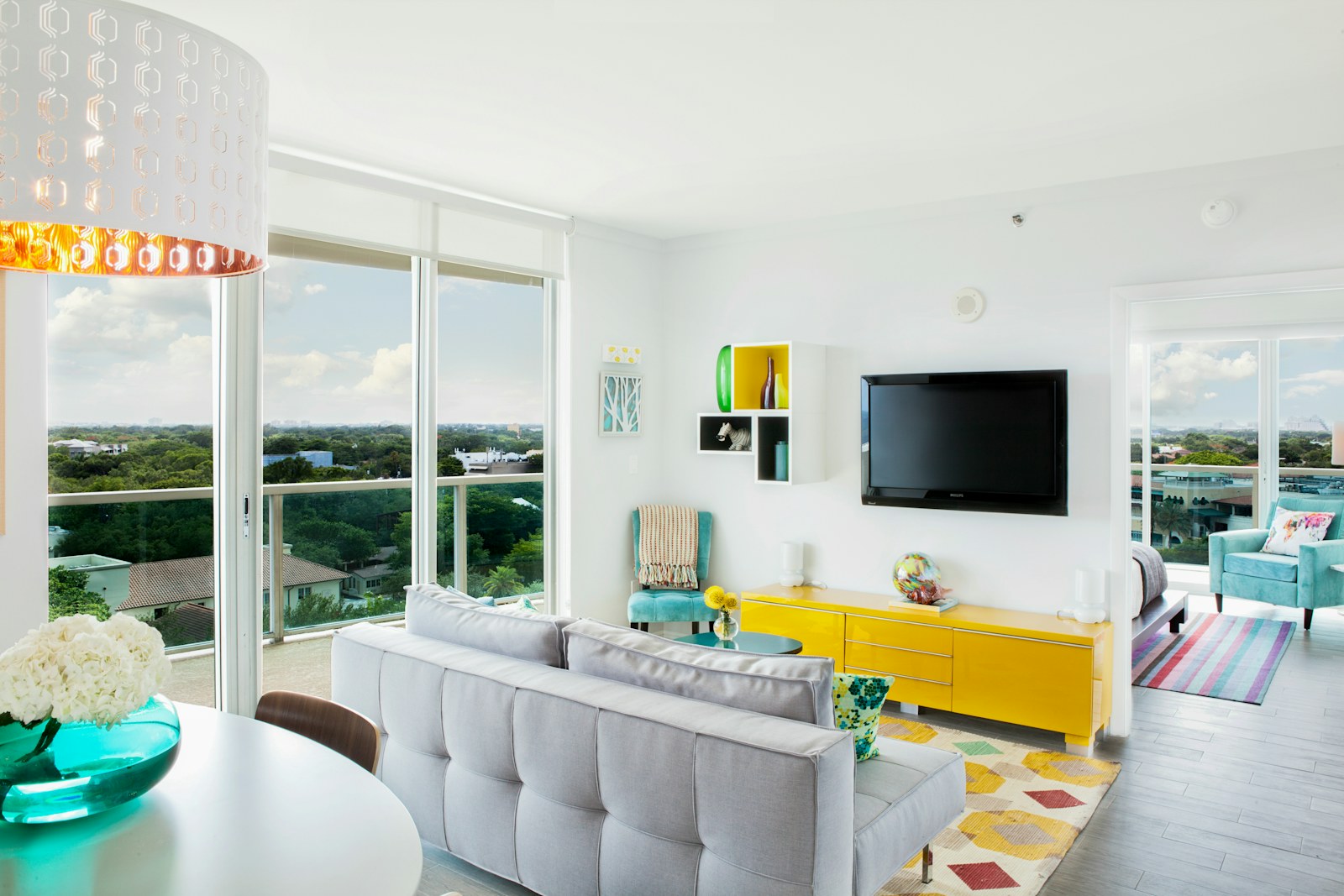
Photo by Blake Woolwine / Unsplash.
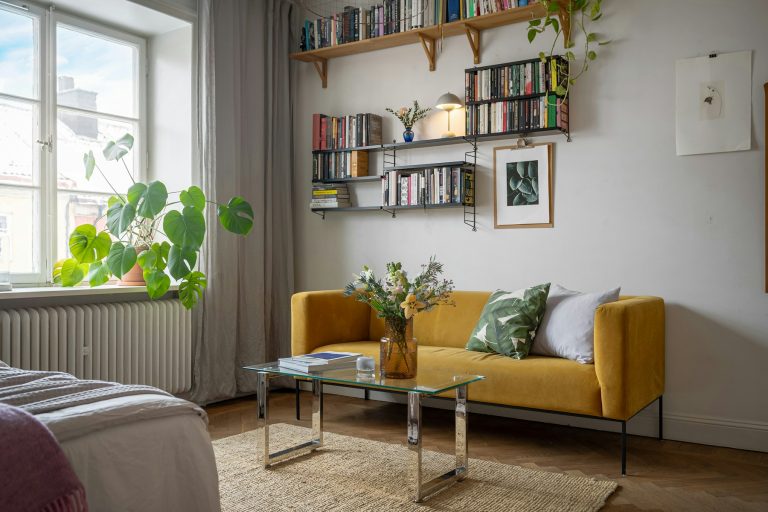
Test out adjustments. Clear the clutter off your coffee table. Move the couch cushions around. Leave your overhead light off and see if you’d be happy to rely on lamps. Notice what makes a room look more expensive, like a rug that relates to the furniture, a task light where you need one, and breathing room around special pieces, and see if you can replicate any of those tricks.
Here are ten swaps to consider before a shopping spree. Use the three-swap planner below to price the ones that would help your room. Decorating doesn’t guarantee a higher sale price; discuss your property and budget with your agent if you’re preparing to sell.
1. Find the problem before shopping
If you’re unhappy with a room, chances are, you’re tempted to start shopping. Resist for now. Clear off the coffee table, shuffle some cushions around and switch off the overhead light and try the lamps. How does the room feel? Take photos from the doorway and your favorite seat. Now you’re getting somewhere. Look at the photos for clues. Does the seating area feel disconnected? Is the view from your favorite seat unsatisfying? Do you catch your eye on things that annoy you at eye level? Once you’ve identified what’s wrong, try to articulate it. For instance: The rug doesn’t visually group the seating area / The reading chair has no useful light / The room needs more personality. Chances are, once you’ve identified a specific problem, it’ll lead you to a more targeted solution that might involve moving or editing instead of buying. Before you buy anything, test-drive solutions when you can. Can you borrow a lamp and try it for a day? Move the chairs around before investing in a reupholstering project.
2. Connect the seating with the rug
Try bringing at least the front legs of the sofa and main chairs onto the rug. It’s a decorating starting point, not a rule that overrides the shape and use of your room. Before shopping, lay down paper or tape suitable for your floor finish to create a template of a new rug size and see if it solves the problem. Consider whether the bigger size might block doors and impede traffic. Size up or down as necessary. Also, when shopping for a new rug, don’t just consider pattern and color: Consider maintenance, pile height, edging and whether it needs a pad.
Related to the previous tip: If you’re tempted to buy a rug and your floor is beautiful, consider not covering it up.
Can the rug bring the seats together?
A rug floating in the middle
The seating can feel disconnected.
Front legs meet the rug
Try the arrangement before you buy.
3. Put light where you use the room
Many times when a room feels blah, it’s because the level of ambient lighting, such as the overheads, is wrong. Try adding table and/or floor lamps around the room. Consider how they’ll be used and try them out in situ to make sure cords don’t create a tripping hazard and bulbs aren’t glaringly visible. Then, shop for new bulbs. It’s easy. Lumens indicate brightness; wattage indicates energy consumption. Around 2700K is a warm-white starting point you might like in living rooms and bedrooms. Try a suitable bulb before replacing them throughout the house. For more information, the U.S. Department of Energy has a primer on lighting. Start with one or two rooms before tackling a project for the entire house; it’s better to see how new bulbs go with finishes in the room before investing in bulbs for every fixture in the house. Follow fixture limits, bulb specifications and dimmer compatibility instructions. Use a qualified electrician for electrical work.
4. Try a new shade on a good lamp
When a lamp seems drab, check whether the shade is the part that needs replacing. You can salvage the base and give your lamp a fresh look. Measure your current shade before shopping to avoid going home with a shade that’s too large or small. Note how it attaches to the base. Bring the lamp with you to make sure the shade is balanced and will cast its glow pleasantly. Put the lamp in its usual position, then sit nearby and look at it. Is the bulb glaring? Does the shade’s height seem small or large compared with the base? Follow the manufacturer’s instructions as to which kind of bulb to use. Improvised paper and fabric shades pose fire hazards. Choose a plain shade to show off an ornate lamp, and consider adding pizzazz with a fancier shade on a more modest lamp.
5. Get the curtains to fit
Chances are, it’s a question of fitting. Maybe they’re not wide or long enough, or they’re hung at the wrong height. Measure from where you’re going to hang them, taking into account the style of curtain and curtain rod. Factor in how much fabric will gather when the curtains are pulled to the sides. Consider using rods that extend farther than the width of the windows. Curtains will then be away from the glass when drawn, admitting more light. If you opt for floor-length drapes, think about pets and other factors. Would they hinder your ability to clean under windows? Would they bump noses with doors? Might they conceal vents? The Consumer Product Safety Commission warns that accessible window-covering cords are a strangulation hazard. Choose cordless window coverings where young children live or visit. Check mounting requirements and rental permissions before drilling. When your curtains are hung, give them a shake-out, open them, shut them, and check that the rod doesn’t sag and the curtains don’t brush against furniture.
6. Give meaningful art a thoughtful arrangement
You might be able to improve the effect of the group by rearranging them, adjusting the spaces between them, or hanging them at a height or in a formation that echoes the shape of a piece of furniture. Take down the pieces, trace their shapes on paper, and play with their arrangement on the floor or taped to a wall. Consider whether certain pieces are more interesting than others. Rather than replacing them all at once, pare your collection to highlight the most beautiful or meaningful pieces. You may be able to update some of them by adding mats or putting them in new frames. This will probably be less costly than investing in a collection of prints and frames, and it’s nice to have meaningful things you love on display. Leave plenty of open walls to avoid a cluttered feel. Rotate your art to add some pizzazz from time to time.
Three checks that cost nothing
Borrow it
Try a lamp from another room in the corner that feels dark.
Measure it
Check the space with doors and drawers open.
Live with it
Use the room for a day before deciding what to order.
7. Leave room to sit on the sofa
Declutter your sofa. There’s something to be said for the charm of a couple of well-placed cushions. But there’s no seating on a sofa that’s been transformed into a cushy island. Remove a couple first, then see whether you miss them. Keep the number that leaves comfortable seating.
Maybe you need new covers instead of new cushions. If it’s the covers that need refreshing, try replacing only those, saving yourself some money. If an insert is worn, see whether that part alone needs replacing. Measure to ensure you’ll be replacing them with cushions of the same size. You might be surprised by the difference that new, plump cushions will make in your couch’s appearance.
You might be able to rescue some of your cushions by replacing their covers with coordinating colors and fabrics. It doesn’t always help to match cushions to the colors in a room, but you might find it livelier when their hues reflect colors already present. Consider the feel of the fabric too. Would you want to drape a precious, fragile piece of silk on a family-room couch where it would get beaten down every day? If you’d be anxious about the fabric every time someone sat down, choose something that suits how your household uses the room.
On the bed, smooth, well-fitting bedding may do more for the room than another layer of decorative pillows. Wash or mend what you can, then decide what actually needs replacing.
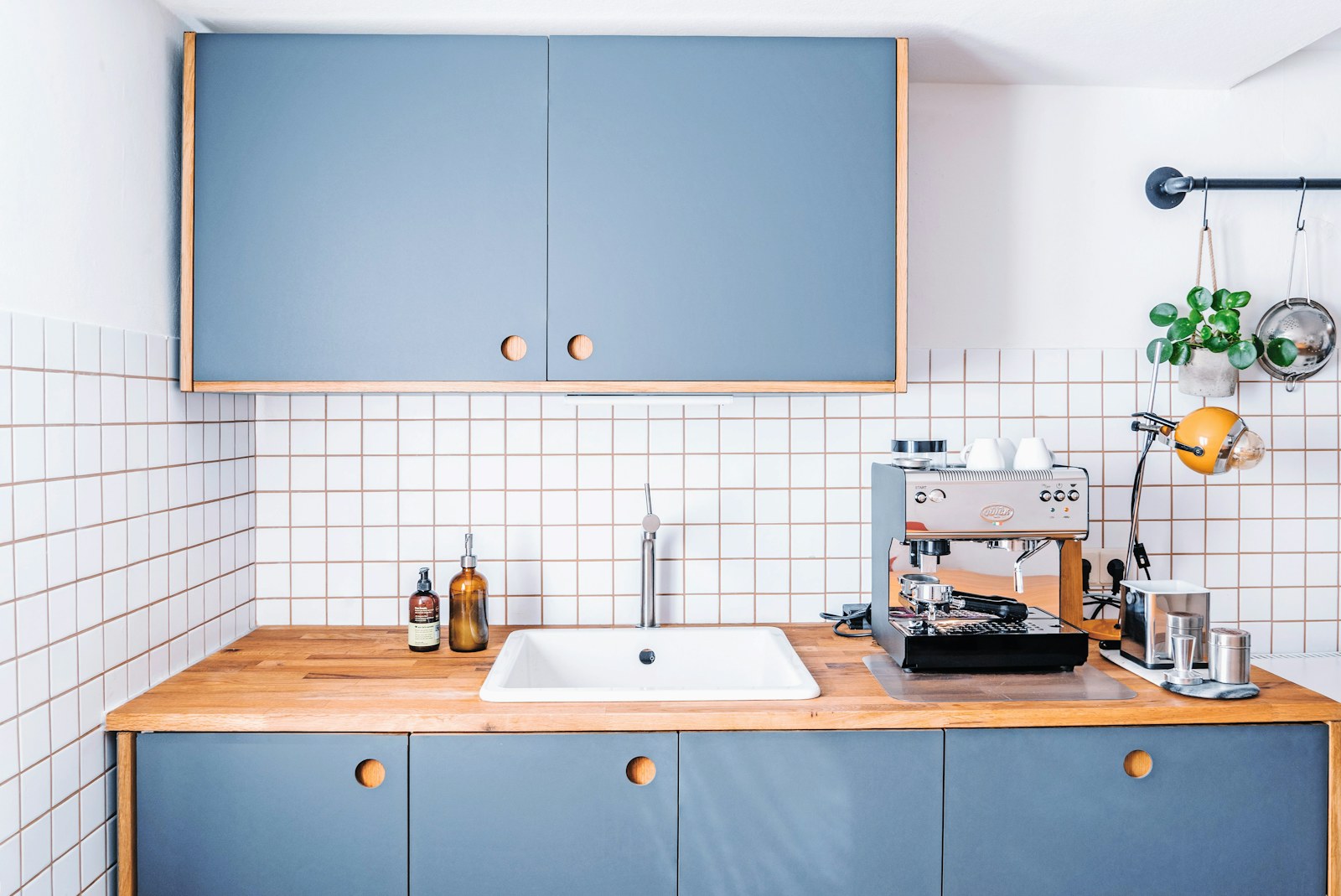
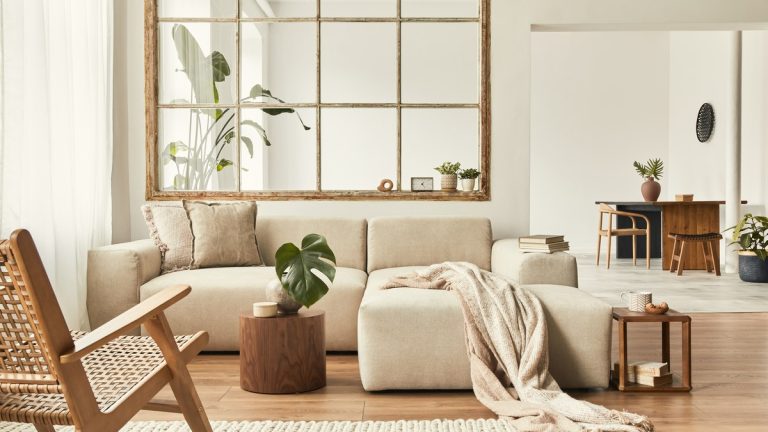
Photo by Vincent Erhart on Unsplash.
8. Replace hardware that needs replacing
If the problem is just a loose handle, tighten it. If the problem is a broken or dysfunctional handle, find out what’s required to make your new hardware a match. Many pieces of two-screw hardware are easy to replace as long as you pay attention to a couple of details. Measure from the center of one screw hole to the center of the other. Find out how long the screws are and how thick your doors are. Make sure you’ll be able to open doors fully once your new hardware is in place.
Sample one piece before committing to them all. Especially when replacing hardware in an entire room, buy one piece first. Live with it, test-drive it. Make sure you’re choosing something that doesn’t snare clothing, bonk into neighboring drawers, or require additional holes. Hang on to your original hardware until you’re sure. Keep usable originals as spares or for restoring a rental. Check the return terms before ordering replacements.
Choose ergonomically. Hardware is something you use every single day, so choose wisely. You want pieces you’re happy to grab on to, easy to get a good grip on. Spend a little more if necessary to choose pieces you love.
Don’t worry about matching. You might be surprised to learn there’s no requirement for your metals to match. Which means replacing your cabinet hardware does NOT necessitate replacing a perfectly good faucet.
9. Leave useful space on the surfaces
Empty the entire surface and give it a good cleaning. Then take inventory of the stuff you’re planning to put back and figure out how much surface space they require. This might mean putting away some of those lovely keepsakes you’ve been meaning to display forever.
Choose decor that doesn’t get in the way. The last thing you need is another obstacle between you and your spouse during conversation. Resist the urge to crowd tabletops and mantels with knickknacks taller than your heads. Choose pieces you love, but that won’t obstruct views or block windows.
Choose storage that makes sense. A tray or small bowl will keep your sunglasses and keys organized and ready to grab. Clear surfaces make it easier to find things and clean up.
Consider the practical details when choosing houseplants. Make sure you have an open space with the type of light your plants require. Commit to tending them. Make sure they’ll be safe for kids and pets.
10. Make the entrance work for everyday life
If you don’t have a place to store bags and shoes, they’ll be on the floor, no matter how gorgeous your entryway is. Even a narrow cabinet can hold boots and purses off the ground. Hooks on the wall are another possibility, as is a small entryway table.
Consider flow. Think about how much space you need to walk through the entryway comfortably. Choose furniture that’s not too bulky to leave plenty of room to pass, including with doors open.
Think about function. Choose a rug or runner with flat, secure edges that won’t pose a tripping hazard. Make sure you can easily reach any light switches.
Choose a mirror that reflects something lovely. A mirror that bounces an overstuffed corner will amplify the clutter.
Choose art that fits the mood. Choose pieces you love, but also consider how you want to feel when you come through the door. Incorporate colors and textures from neighboring spaces. An entryway doesn’t have to have a cohesive look of its own, but incorporating colors or materials found in the surrounding spaces makes everything feel more cohesive.
A $100 list. A $123 checkout.
- Bulbs
- $24
- Cushion covers
- $36
- Cabinet hardware
- $40
- Shipping
- +$15
- Tax
- +$8
Beyond the price tags
Add delivery, tax and any installation before deciding whether the plan fits your budget.
Price three changes before you order
- Limit yourself to three projects. If you want more than three projects, choose which are most important to you and postpone the others. It’s better to make fewer, but worthwhile changes than to spread your budget too thin and settle for lesser-quality items.
- Determine your budget. Decide how much you want to spend in total, then break down costs for each project, including not just the item’s cost, but any applicable sales tax, shipping, or installation costs. Here’s an invented example, not current retail pricing. Let’s say your projects include new lightbulbs, cushion covers, and new cabinet hardware. You estimate that the bulbs will cost $24, cushion covers will cost $36 total, and the hardware will cost $40. You estimate that you’ll pay $15 for shipping, and sales tax is $8 total. So, you’re looking at spending $123 total. If you’re unsure of any costs, leave them blank. If there are adjustments you can make that will be free, write 0.
- Measure everything. If you’re considering new window treatments, rugs, furniture, etc., make sure you measure the relevant walls/floors/windows/etc., accounting for any quirks. For instance, if you’re measuring a wall where a piece of furniture will go, account for space needed to walk by the piece of furniture or open a cabinet door. If you’re measuring a window to hang curtains, account for the amount of space the curtains will take up when they’re stacked. Just because a piece of furniture will fit in a room doesn’t necessarily mean that room will remain functional – test out your measurements by tracing outlines with paper or tape suitable for the surface.
- Use existing resources before spending money. If you’re unsure whether you need a floor lamp in a corner, borrow one from the bedroom and leave it there for a few days to test it out. If you’re unsure if you’re ready for an area rug, create a template from newspaper or other scrap paper to get a sense of the right size. By using items you already own to make templates, etc., you can save yourself the cost of shipping rugs back.
- Live with your space. It’s easy to look at photos of professionally-staged spaces and assume you want to recreate those looks in your own spaces, but a photo doesn’t tell you whether an arrangement will work for your particular needs. Instead, try to take advantage of any changes you’ve made throughout the day and think about what’s working and what’s not. Are there any minor tweaks you can make? Is there anything you’re surprised you’re enjoying? Are there any items you’re surprised you’re ignoring?
- Be flexible. As you begin implementing some of the above suggestions, it’s possible that you’ll realize your priorities are different than you thought – that’s ok. Design is never finished and it’s a balance of practicality and beauty. If you’re happy, you’re on the right track.
Your room, your budget
Plan three swaps before you spend
Choose up to three changes. Note what you can try for free, then add your actual costs. Leave unknown prices blank; enter 0 for a free change.
Your entries stay in this page and clear when you reload. The bars compare your quoted costs; they aren’t estimates of resale value.
To calculate manually, add the costs of your chosen swaps, delivery, tax and installation. Subtract that sum from your budget. Get missing quotes before treating the total as complete.
Keep reading: Try the room-photo tool.
Featured photo: Blake Woolwine / Unsplash. Reviewed September 27, 2026. Illustrative calculations are labeled separately from published research.