The One-Weekend Room Rescue: Six Fixes That Cost Almost Nothing

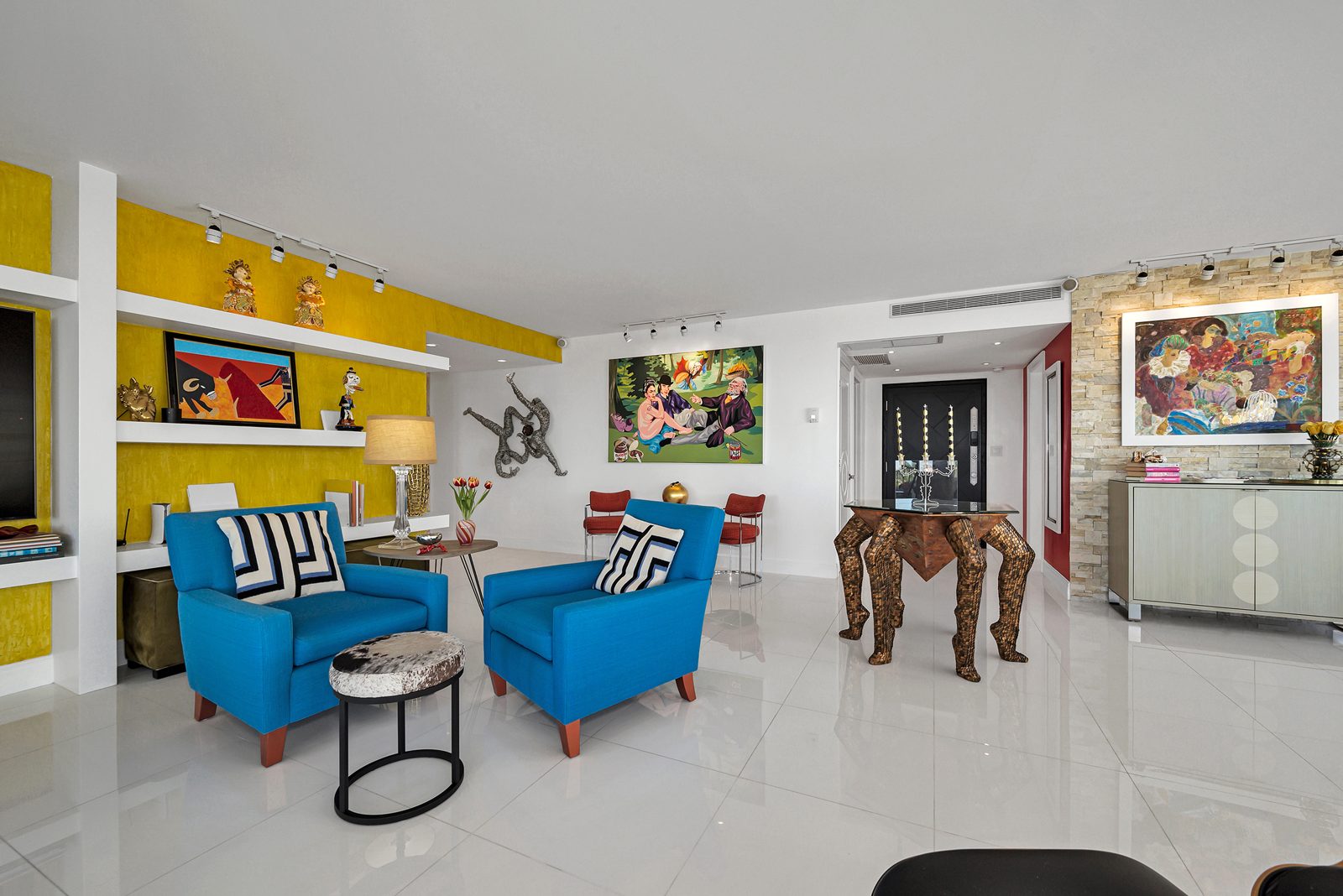
The yellow wall in my living room. Not beige.
Worth the scroll
- ↓The six-inch move that makes a whole room exhale
- ↓What a too-small rug does to a perfectly good floor plan
- ↓The $25 hardware-store gadget that beats any throw pillow
One room, rescued
I always had that, and I still do. When I go into somebody’s home, I sit there and I think of ways to change it. If I go into a hotel room, I like to change it. It is something in my mind that I cannot stop.
You do not need to paint a wall gold. You do need to look at the room as though you have never seen it before. Most rooms that feel wrong can be improved by changing the light, the furniture placement, the amount of clutter, and the few things the eye notices first.
Start with the way the room feels
Here are some basics to get you started. Remember that this is all about making a place that is physically comfortable and easy, not pretty and decorated. Is your room well lit? Stand in the doorway and take a look during the day and at night. You may need a couple of lamps. Is there too much clutter for the eye to see? Create a focal point (a chair, plant, etc.), that the eye can rest on and leave it be. When you look at your chairs can you have a conversation, or do you have to raise your voice? Pull them closer for a more intimate setting. It takes only time not money.
Friday night: look at the room like a stranger
I start the weekend the same way, with a notepad. No shopping yet, I stand in the room’s doorway and jot down the first three things I notice, just as a guest does when they enter the room. Next, I take a hasty phone pic from that same spot. Viewing the pic later reveals clutter, badly-lit areas and askew artwork that went unnoticed with the naked eye.
After that, I walk the room and jot down more notes, and take more pics if it seems warranted. I’ll even sit in each chair or sofa to make sure there’s a place to set my cup and that there’s sufficient reading light. Proper lighting makes a world of difference.
Friday night’s to-do list might include observations as simple as too dark, needs decluttering, feels crowded, sofa is floating and the room lacks a focal point. I save my notes and revisit them on Sunday night, to check against them.
Give this a try in one of your rooms. Start with a pad of paper and a photo, but refrain from changing anything, resist the temptation. Just walk your rooms with an open mind and take copious notes. By not immediately correcting the issues you identify, you’ll give your brain a chance to rest up and figure out just what it is you need to do to improve the space. Not only is writing things down the first step towards a to-do list, it will keep your energy from being focused on inconsequential changes. Best of all, this step won’t cost you a thing.
Saturday morning: move before you buy
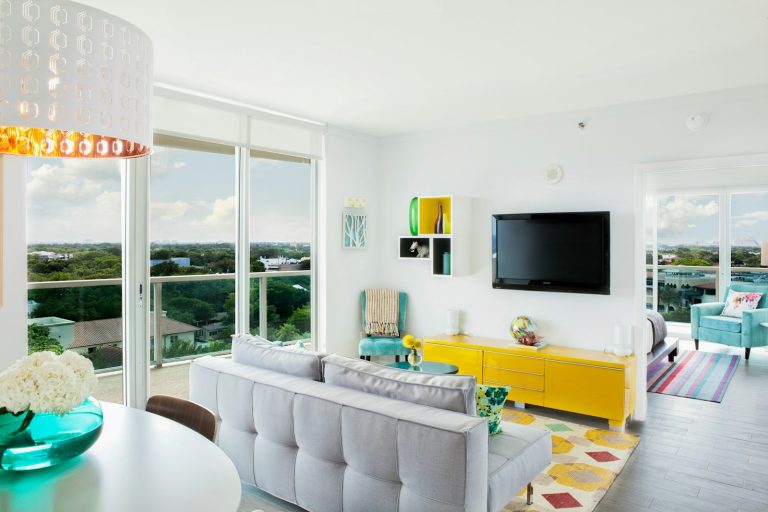
Try pulling the couch out a couple inches from the wall to allow the arrangement to breathe. Put chairs close together for easy conversation, not so far apart that you have to raise your voice. Make sure everyone has easy access to a table so no one has to get up to grab a coffee. And if there’s a rug in the mix, get at least the front legs of major furniture pieces onto the rug to knit all of the items together into one grouping. The point is to make adjustments until you have a living room arrangement that makes sense and will cost you nothing in the process.
Do not buy a matching set simply because it solves the room in one delivery. A mix of wood, fabric, metal, old, and new gives the room a history.
Rugs, curtains and the two measurements that matter
Here are two easy tricks to make your ceilings seem higher and your rooms seem larger:
Use the right sized rugs. I am always surprised how many times a rug will be placed under the coffee table. Not only does this leave your seating un-anchored (which can cause the seating to appear to float in a room), the smaller rug diminishes the scale of the room. The rug should be large enough that the front legs of all seating (chairs, sofa, etc) are on the rug. Chances are that means you’ll need a larger rug than you thought, most living room areas will need at least an eight by ten rug. My advice, tape off the space in the room before you make the investment to make sure there will be adequate walking space and clearance for doors. If a new rug isn’t in the budget, try using your existing rug atop a larger neutral rug.
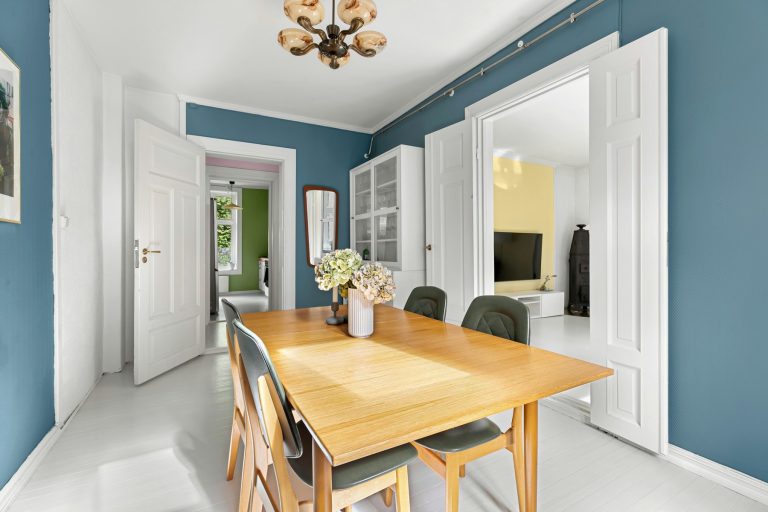
Hang curtains higher. Curtain rods should be as close to the ceiling as possible and wider than the window. It’s ok (and actually better) if your curtains don’t even cover the window when closed. Keep the fabric to the sides and people will still be drawn to the beauty of the windows and will notice that lovely high mounted rod. And length matters here, too, either pool those gorgeous drapery panels on the floor or stop just shy of the floor. These are just a couple of design tips I share with clients all the time, they go a long way to anchor your space, describe its shape and give it some heft, often more so than splurging for that perfect new sofa or agonizing over paint colors.
Saturday afternoon: clear every surface
I encourage my clients to clear off all items from counters (kitchen, etc), coffee tables, dressers, consoles, etc. When you have an empty surface to stare at, it can be a little intimidating. What to put back? Only place back items on the empty surface if it’s useful, beautiful or has some meaningful significance to you. If not, it stays off of the surface. Items that are off the surface are in a basket, a drawer, a cabinet, in the donation pile or out of that room, not out in open for all to see. Rooms with cluttered surfaces are tired, feeling closed in. With clear surfaces, light has a pathway, more wall space is revealed, more floor space is revealed, a simple concept, but such an impact to a space. A calm room is easier to live in, and easier to sell later.
What to do with the things that leave the room
When your donation container is full, take it to the donation location or at least out to your car. If it is just sitting there it keeps the level of visual noise turned up, and drains some of your mental energy that could be better spent on your next task.
Grab 4 boxes or containers, and label them: 1, belongs in its real home, 2, donate, 3, trash, 4, decide later. Write a date on the outside of the decide later container, of when you will be opening it to sort through it. When that day comes open the box, and make your decisions. I promise you will most likely never get to that box, if that happens just chuck all of it without even looking. This system helps you to make the decisions, while putting off the decisions that aren’t so easy to make.
Declutter each room one at a time. Ask yourself whether you love this item and whether you use it. What is its true purpose? Would I buy it again? Would I miss it if it was gone?
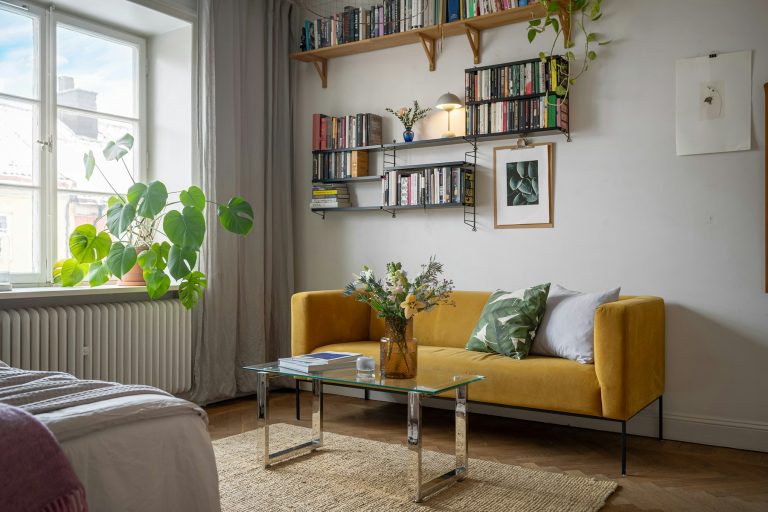
In the living room, that 3rd set of decorative candle sticks, or those extra throw pillows should be donated, or up on the shelf in the closet (chances are you will never use them, and your living room will be calmer and seem larger as a result). The extra blankets should get a shelf in the closet, or under the bed. Sort through the books, donate (or trash if they are dog eared and missing covers) anything you haven’t picked up this year or so, or anything that you just don’t love. Keep the ones you love, the ones you are using or will be using soon. Find a basket or container to house that always growing pile of mail that is building on the coffee table. Get a small lidded basket (or find a drawer) to corral all the little items that need a place to call home: remotes, phone chargers, pens and pencils. Those little items will find a home on your coffee table otherwise, so give them one.
Sunday morning: fix the light and the visible problems
Before you spend money on new lighting fixtures, go on a hunt for lamps. It is amazing the difference it will make to have a well lit space. If there is one in another room, bring it in. Rooms seem livelier when there is more than one source of lighting. Also, check the lighting itself. Are they all the same color? Nothing will make a pretty room seem off kilter like three warm lights and one blue-white bulb. So fix that first. When potential buyers walk through your house they will notice how nice it is that all of your lights match (and especially if they are on the warmer side).
Then do the same walk-through I do before a listing.
Bulbs, lamps and the dimmer
The least expensive but most under-utilized way to enhance any room in your house is proper lighting. I try to always have three sources of lighting in a living room, the overhead, one at table height near where people are likely to be seated and another in a corner or somewhere else that would otherwise remain in the dark. Try moving lamps around before you invest in new ones. For me, I’ll move a lamp into the empty corner for the night and see if I think it needs its own lamp before investing in a new one. I like to keep the light colors consistent within a room (bulbs that say soft white on the packaging are warmer in color and make a room look cozy like evening.) Old lamps can be made to look new with a new shade. Yellowed or dented shades can make even the trendiest looking lamp seem dowdy. More can be done to change the mood of a room at night by installing a dimmer switch than buying another pillow, and it is no big job for an electrician. The best way to determine if you have everything you need in a room is to sit in it after dark with nothing turned on but lamps. Do you feel like you’re missing something?
Sunday afternoon: finish with life, not more stuff
Fresh flowers, a bowl of lemons, a book you are actually reading, or one vintage piece can finish a room better than a cart full of generic accessories.
Art, mirrors and the wall you keep looking at
Another one of my favorite ideas is to identify the focal wall of a room. There’s always one place that your eye goes to first, and this is usually the wall in front of your sofa or the wall opposite of the entryway into the room. That wall should have the largest piece of art (or a sizeable mirror). Group all of your smaller pieces together somewhere else, as competing pieces of art can make a room seem busy. My favorite idea is to invest in one large piece of framed art (or mirror), since one big piece will almost always outshine six little pieces strewn about, and will cost less than that new chair, but have just as big (if not bigger) an impact. A couple other ideas: I like to hang art lower than is popular, and I like the middle at about eye level (when standing), especially if it’s above a couch, so that it seems like it relates to the couch. Also, before you drill holes all over the place, cut out templates in newspaper/paper for the pieces you’re thinking of hanging and tape them up to see what works and what doesn’t. Saves time and holes. And use mirrors strategically, placing them right across from windows to double the light, not right across from your cluttered junk corner, which would only double the junk.
If the room is empty, show what it could become
That same idea helps at home. Take a photograph before you begin and another when the weekend is over. A photograph makes spacing, clutter, crooked artwork, and weak lighting easier to see.
The rescue order
The map
The fix list, sorted by price
Start with the free column this weekend. Spend money only after the room has settled.
Free this weekend
- Pull every seating piece off the walls
- Regroup art and rehang it at eye level
- Clear surfaces down to three things each
- Move lamps in from other rooms
- Break up the matching set across rooms
Worth the money
- A rug big enough for the front legs, 8 by 10 in most living rooms
- Dimmer switches for the overheads
- Warm 2700 Kelvin bulbs throughout
- Full-length curtain panels, hung high and wide
- One large piece of art for the biggest bare wall
Do the free column first. Half the time the room settles so well that the shopping list shrinks on its own.
The point is not a perfect photograph. It is a room that works on an ordinary day. Spend the weekend understanding the room before spending money on it.